Research shaping the future of GenAI capability building in higher education
The University of Melbourne is significantly strengthening staff and student readiness for a Generative AI (GenAI)-enabled future through pioneering research from the GEM Scott Teaching Fellowship.
First published by The University of Melbourne
The University of Melbourne is significantly strengthening staff and student readiness for a Generative AI (GenAI)-enabled future through pioneering research from the GEM Scott Teaching Fellowship led by Dr Eduardo Oliveira, in collaboration with Cory dal Ponte, Dr Narelle English, Associate Professor Kayley Lyons, Dr Shannon Rios and colleagues.
GenAI has become increasingly embedded in educational and professional environments. While some staff and students at the University have been quick to adopt GenAI tools, clear guidance on how to use these technologies critically, ethically, and effectively is important to support widespread uptake.
Dr Oliveira’s Fellowship was designed to address this challenge and tackle scaling the promotion, measurement and development of GenAI literacy competencies in higher education.
Uncovering the ‘skills bypass’ phenomenon
A University-wide self-assessment survey was a key first step to help understand how the University of Melbourne community perceived and interacted with GenAI.
During this process the team discovered the 'skill bypass' phenomenon where users, most commonly students, can have high confidence in prompting and generating AI outputs, but don’t have the foundational understanding and lack the evaluative judgement to debug, verify, or correct AI responses.
“Realising that students can so easily 'bypass' conceptual understanding to achieve creative output made it clear that our role as educators must shift. We can no longer assume that the ability to generate an output equals the possession of competence,” shared Dr Oliveira.
Findings from the survey contributed to the design of a GenAI Literacy and Fluency Framework. Existing GenAI literacy frameworks have often been abstract and focused more on theory rather than how students and staff actually use GenAI in real study or work contexts. Most current assessments test what people know about GenAI, not what they can do with these tools. They also don’t help learners identify their own strengths, gaps, or ethical concerns.
Working in close collaboration with Cory dal Ponte and Dr Narelle English, the team contributed to the design of a progressive 28-item matrix Framework. Dr English subsequently led its empirical validation, and Cory led its further development as part of his role as Senior Learning Designer and Project Lead of the Organisational Development group — producing a tool that focuses on allowing learners to self-assess their competence, identify their own zone of proximal development and select tailored learning pathways for themselves within the University’s new GenAI literacy program for staff.
Fostering AI literacy with colleagues
A core component of the Fellowship was not just researching AI literacy but actively fostering it among University colleagues.
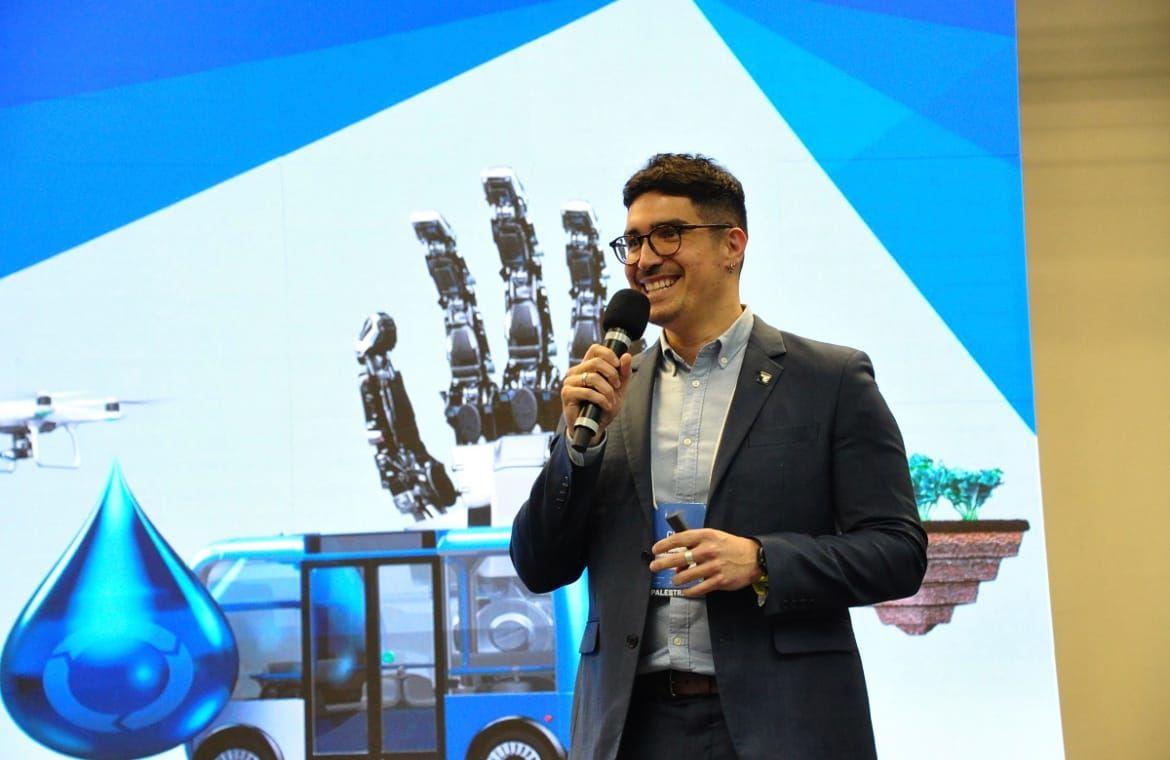
More than fifty hands on workshops for educators were delivered through the Fellowship, with the aim of demystifying GenAI by 'opening the black box' and explaining core concepts, such as large language models and prompt engineering, using clear, nontechnical analogies.
“These workshops required participants to engage directly with various GenAI tools, building their practical skills in real-world contexts while simultaneously raising awareness of ethical considerations and responsible usage,” Dr Oliveira said.
From the Fellowship
Dr Oliveira's GEM Scott Fellowship was the foundation that brought together a brilliant team whose collective work has made a significant mark on how higher education responds to GenAI.
“Eduardo’s Fellowship and this pioneering research has already had a direct impact on how the University approaches developing staff GenAI capability. It will also be pivotal to inform how we continue to support students and staff to develop judgement, confidence and ethical awareness in using GenAI across teaching, learning, and work,” Pro Vice-Chancellor Students and Education, Professor Jamie Evans said.
The research is now being shared through national and international conferences, highlighting the University’s leadership in ethical, research-informed GenAI adoption.