Bringing GenAI into the classroom with Dr Rachel Woodlock
Meet Dr Rachel Woodlock, Lecturer in Islamic Studies at the Asia Institute within the Faculty of Arts, University of Melbourne, who has recently brought generative AI (GenAI) into the classroom by being part of two Learning and Teaching Initiative (LTI) grant projects.
First published by The University of Melbourne
Meet Dr Rachel Woodlock, Lecturer in Islamic Studies at the Asia Institute within the Faculty of Arts, University of Melbourne, who has recently brought generative AI (GenAI) into the classroom by being part of two Learning and Teaching Initiative (LTI) grant projects.
Developing GenAI tools to be used in the classroom
One of the LTI projects Rachel is involved in is the GenAI+Teaching Agile Development HUB, led by Dr Chris Honig. This initiative supports educators in integrating GenAI tools into their teaching practices.
“There is a lot of fear around AI in education,” Rachel acknowledges, “but there are also potential benefits that we are only just beginning to imagine.”
The project responds to the rapid emergence of GenAI technologies, particularly since the public release of ChatGPT in late 2022. Since there aren’t many established tools that are readily available for the classroom, especially for educators without a background in tech, the HUB was created to help. It aims to bridge this gap and give educators custom chatbot templates that can be adapted to different disciplines.
How she uses this in her subject ‘Islam in the Modern World’
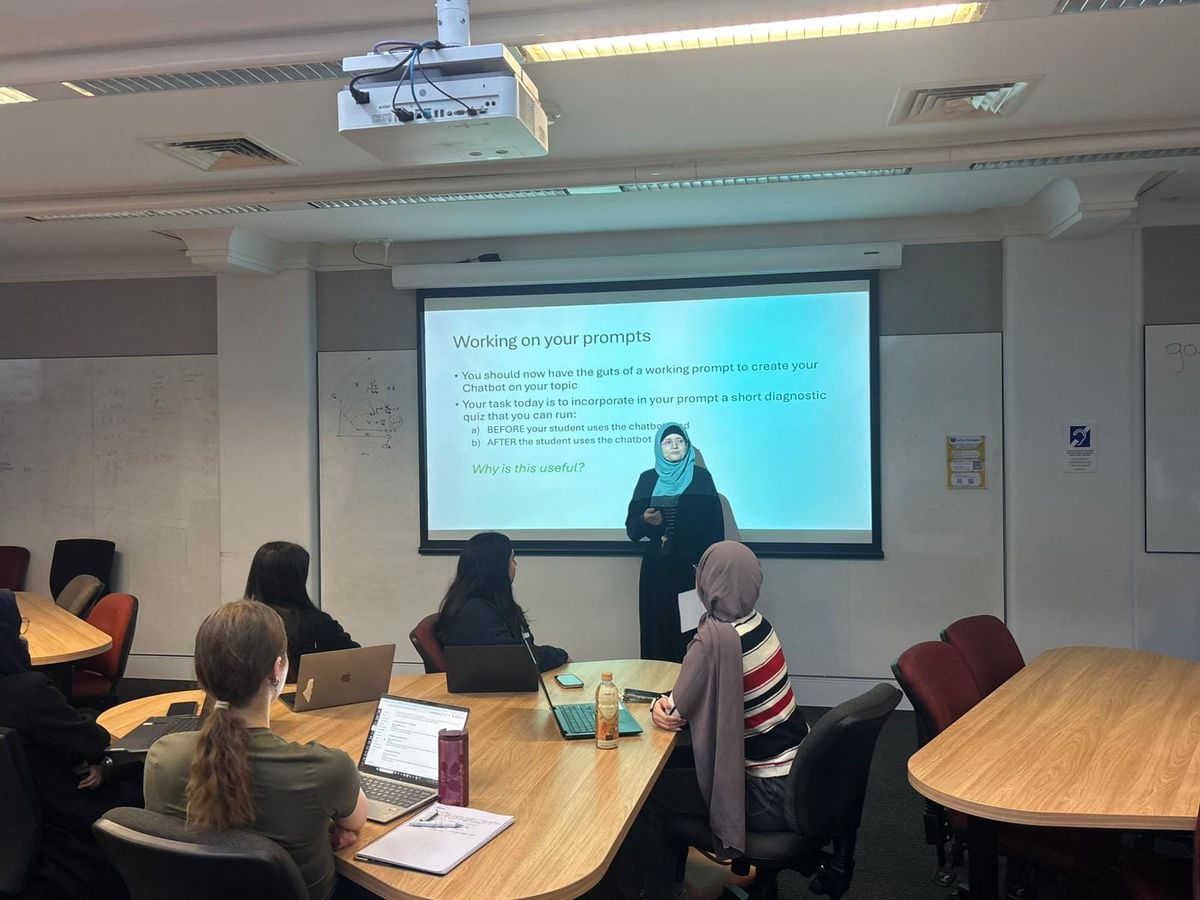
In Islam in the Modern World, students use an interface developed by Dr Honig’s team to build their own Socratic-style chatbots, which guides through topics using continual probing questions to gauge understanding . These bots are designed to explore contemporary issues facing Muslim communities, such as the role of religious law in modern nation-states or the contested debates around hijab.
Students curate high-quality sources and engineer prompts to shape their chatbots into effective Socratic teachers.
“This activity isn’t just about subject content but also is an opportunity to discuss the ethics of AI use, whether these tools are reliable sources of information, how they impact learning and what bias they may have.”
Transforming Arts classrooms through experiential learning
Rachel is also part of the LTI project on transforming Arts classrooms into experiences through rigorous experiential learning design, led by Dr Elena Balcaite.
This project builds on the Socratic chatbot activity, and surveys students about how they felt using it to help create resources and workshops for educators in the Faculty of Arts. The goal is to develop guidance for classroom-based experiential learning that is both rigorous and engaging.
Why the focus on GenAI in the classroom?
Rachel’s interested in bringing GenAI into the classroom because she sees how these tools can change the way we learn. They bring challenges to traditional assessments but also open up opportunities to use better teaching and assessment practices. She also believes helping students understand when and how to use AI responsibly is a vital part of preparing them for the future.
Early project results and rethinking the focus on educators roles in GenAI
The initial trial of the Socratic tutor in 2024 was a single tutorial activity, but its impact was immediate. The class was one of the liveliest of the semester and Rachel enjoyed reading and giving feedback on the responses because she could see how much students were excited by this.
In 2025, the activity evolved into a multi-week major assessment, revealing new insights and challenges.
At the start Rachel thought that most students already knew how to use GenAI tools and were really advanced with it, thinking that they were using them all the time. But she found that students actually have very different levels of experience with GenAI and that not all students are tech experts, like many assume they are.
“It drove home that we do our students a disservice if we solely focus on academic integrity issues. Instead, I found that we as educators have a role to play in guiding students about how to think about their learning process with AI, not just about how to use the tools.”
How she got started in education focussed grants
Rachel was part of a Community of Practice where she met colleagues from across the University and sparked ideas for collaborating on LTI grants.
Her experience in working with two teams that received LTI grants helped introduce her to the world of grant applications via the leadership of people more experiences. It helped develop her skills in grant writing procedures, navigating human ethics applications and her own future individual applications.
“Education research is a wonderful chance to collaborate with peers who have expertise and strengths in areas that I can learn from,” Rachel reflects. “You may think your research is going in one direction, but an insight or a spark from someone else can bring you into a completely different direction that is even more productive.”
Commitment to professional development and education
Even though Rachels career path was shaped by raising a family, moving overseas and other life circumstances, her passion for teaching and commitment to growing as an educator has not wavered.
Rachel is currently completing the Graduate Certificate in University Teaching offered by CSHE, which has been invaluable for improving her teaching practice. She’s also participated in the Melbourne Academy, a career development program that provided mentorship and strategic guidance.
“I came away with so much good advice about how to develop my career here at the University,” she says. “More importantly, I met wonderful colleagues and senior staff I aspire to follow in their footsteps.”
A passion for teaching and lifelong learning
Beyond her work on LTI grants, Rachel finds deep fulfillment in her teaching role and spending her life learning and helping others to learn.
“It is absolutely delightful when I finish a class and my students are buzzing around as I pack up, wanting to continue the discussion we’ve just been holding,” she shares. “Back when I was an undergraduate, I used to walk around the campus dreaming of being an Islamic Studies academic like my Professor and here I am today! Not only that, but I work alongside that very same Professor. It is a dream come true for me.”
Balancing this passion for her work with her life outside of work is something she struggles with. While she doesn’t have all the answers for this, she has taken advantage of the University’s Wellbeing programme that is available to staff and encourages others to do the same.
Rachel emphasises that good teaching doesn’t happen by accident, it requires continued investment and thoughtful and sustained support, like the LTI grants and other initiatives within the Advancing Students and Education Strategy. She really encourages everyone across the University to get involved to support the improvement of the student experience.